
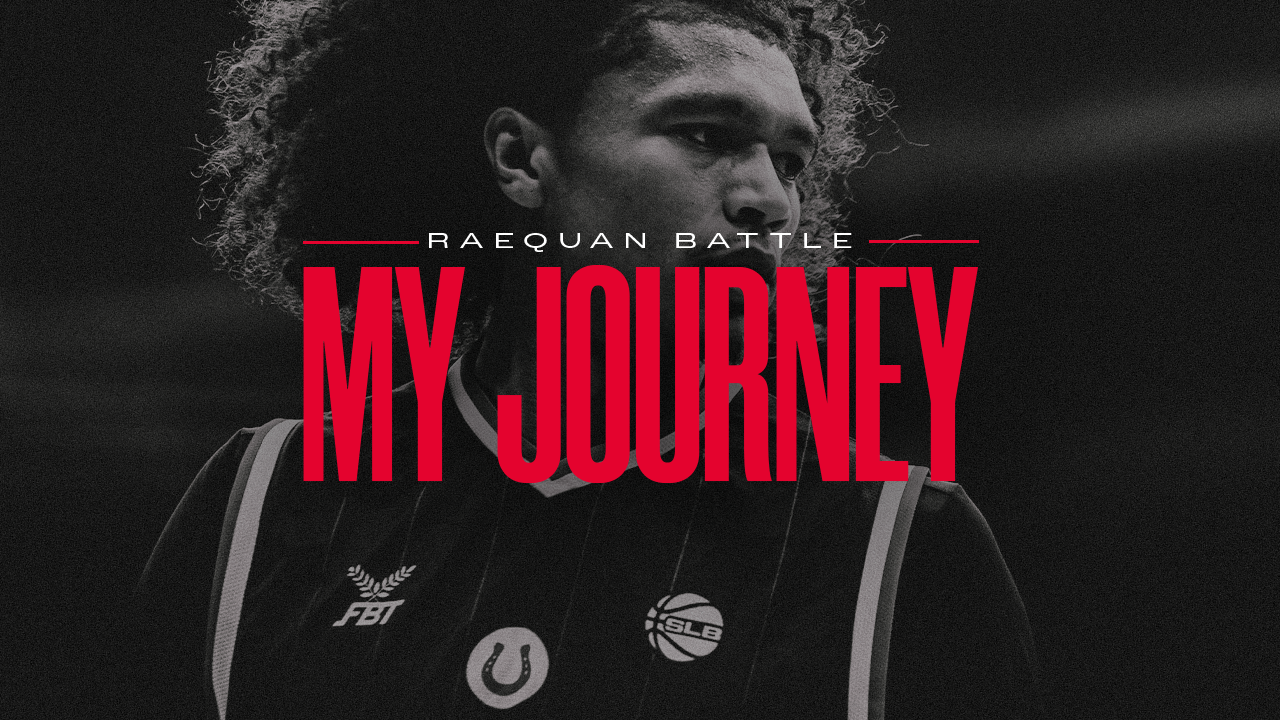
As part of our My Journey series, we speak to RaeQuan Battle about growing up on the Tulalip Reservation, his academic struggles and how his Native American identity continues to shape his career as a professional basketball player. Battle reflects on how he’s got to where he is now and why he carries his tribal flag everywhere he goes – even to the UK.
Author: Emma Oliver | 1284 Communications
RaeQuan Battle was eight years old when his mother pulled him out of bed on Christmas morning. She bundled him into the car and headed to a basketball tournament on the Lummi Reservation in the Pacific Northwest. He didn’t know it then, but that drive would change everything.
His coach that day was family friend Cyrus Freiberg, and something just clicked during that game. Battle won MVP, fell in love with the sport and walked off the court thinking, “I can do this. I can do this for sure.”
For many Native American kids, a place like the Tulalip Reservation which is 40 minutes north of Seattle, represents the edge of the map, where opportunities seem to dry up. For Battle, it was his starting point. Growing up in a close-knit community where “everyone knows each other”, the 24-year-old soon learned on his journey to playing on the professional courts in the UK, that where you come from doesn’t have to define where you go. You create your own path.
A reservation built on culture and family
The Tulalip Reservation exists in that strange middle ground which Battle describes as a “mix of city and countryside”. It’s got the tight bonds of a close-knit community and real cultural roots, but it’s cosmopolitan enough that the wider world doesn’t feel completely out of reach.
Both his mother and grandfather had attended Marysville Pilchuck High School, and when the time came for Battle to choose between staying local at Tulalip Heritage High School – where his younger brother now studies – or venturing slightly further afield, he made his choice and followed his mother’s path to Marysville Pilchuck.
“I thought it was bigger for me,” he says. Even then, he was already thinking about the future.
Battle says he had “dreams and aspirations” that extended to Division One basketball and eventually the professional game. He wanted to prove something to people who looked like him, and who grew up like he did.
“I wanted to show not just my family or myself,” he explains. “I wanted to show so many Indian kids and minorities across the country that you can go anywhere based on where you dream, regardless of where you grew up. It’s up to you to pave the way, and don’t be afraid to ask for help, because you can dig yourself out of any hole.”
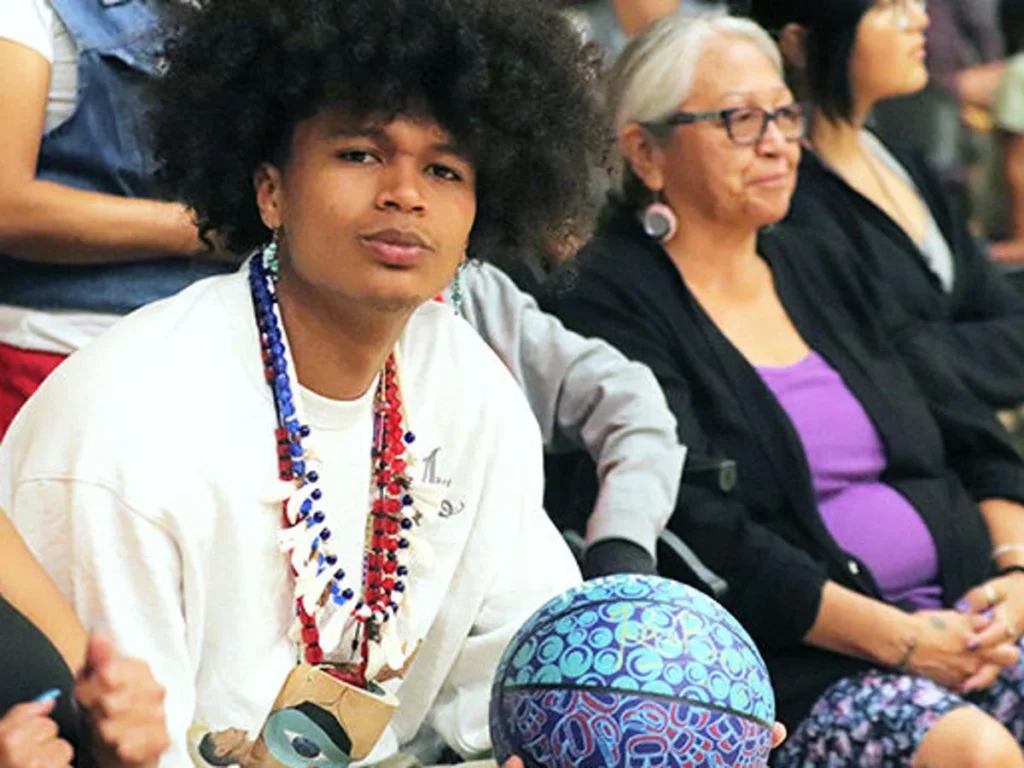
Credit: Michael Rios | Tulalip News
The college gamble
Battle’s path to professional basketball wasn’t exactly smooth. He describes his college career as “a rollercoaster”. It started at the University of Washington, but transferred to Montana State and later West Virginia.
Away from home for the first time, it was there that Battle discovered the difference between being a basketball player and being a person who plays basketball.
“I was able to find myself as a player and a person,” he says. “I moved away from my family and was able to just grow.”
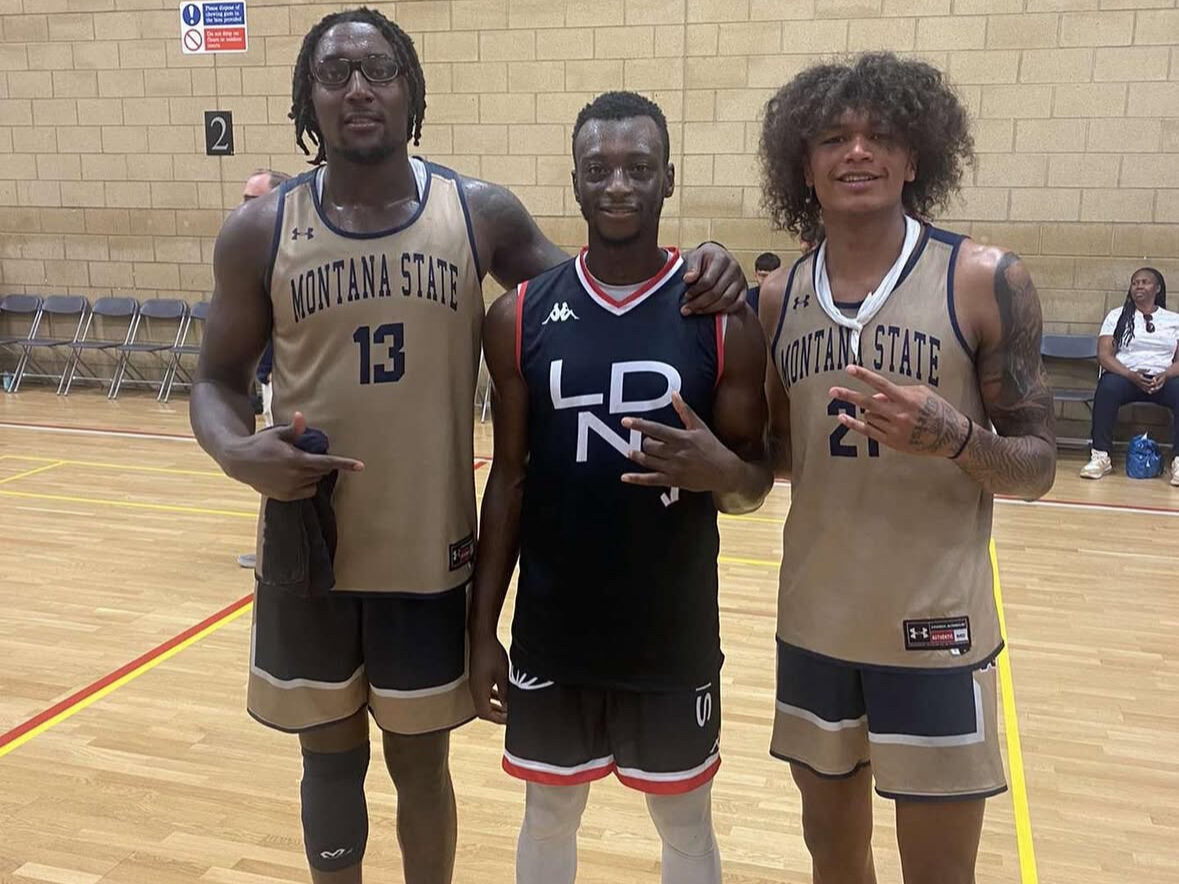
It was also at Montana State that Battle got his first real taste of international basketball. A trip to Italy as a freshman gave him a glimpse of basketball beyond American borders, but it wasn’t until he and the Bobcats travelled to London, to play against UK select team at Barking Abbey, alongside British teammates like Jubrile Belo and Caleb Fuller, that he began to understand the global reach of the game.
“The game at Barking Abbey was with Hoopsfix (UK Basketball media outlet) and it was an introduction to the European core, and it was super dope.”
Battle even played against Manchester Basketball’s Kyle Carey then, a player he would later face again in the SLB.
“Basketball is a small world,” he says. “It brings you to new experiences and new places.”
The weight of leaving
When Battle chose to transfer from Montana State to West Virginia, he says it wasn’t an easy decision.
“Making the choice to move was a big one because I felt like I really built something at Montana State, not just me, our whole team.”
“It hurt to leave, but people grow and adapt. You have to find new opportunities for yourself.”
Battle says it was Coach Danny Sprinkle and others who encouraged him to make the leap. So he did, and headed to West Virginia and the Mountaineers. Battle starred for West Virginia University, where he averaged 16.1 points per game during the 2023-24 season, ranking among the Big 12’s top scorers and earning a reputation as a fearless offensive threat.
After college, the 6’5’’ guard threw himself into the NBA pipeline. He completed 14 NBA workouts, flying from city to city out of Fort Lauderdale with his trainer Lamont Evans, showcasing his skills and his determination. He earned a Summer League invitation with the Charlotte Hornets. Playing for the Hornets, even in Summer League, confirmed what he already knew: he belonged at a high level.
Battle then signed with the G League’s Greensboro Swarm, affiliate club of the NBA’s Charlotte Hornets for the 2024-25 season, where he averaged 5.0 points but shot over 40% from three, 1.6 rebounds, and 0.4 assists per game. His three-point shooting emerged as a genuine offensive weapon. In one standout performance, he got 19 points on just six attempts from the field, connecting on five three-pointers.
“Playing in the G league showed me what I’m capable of.”
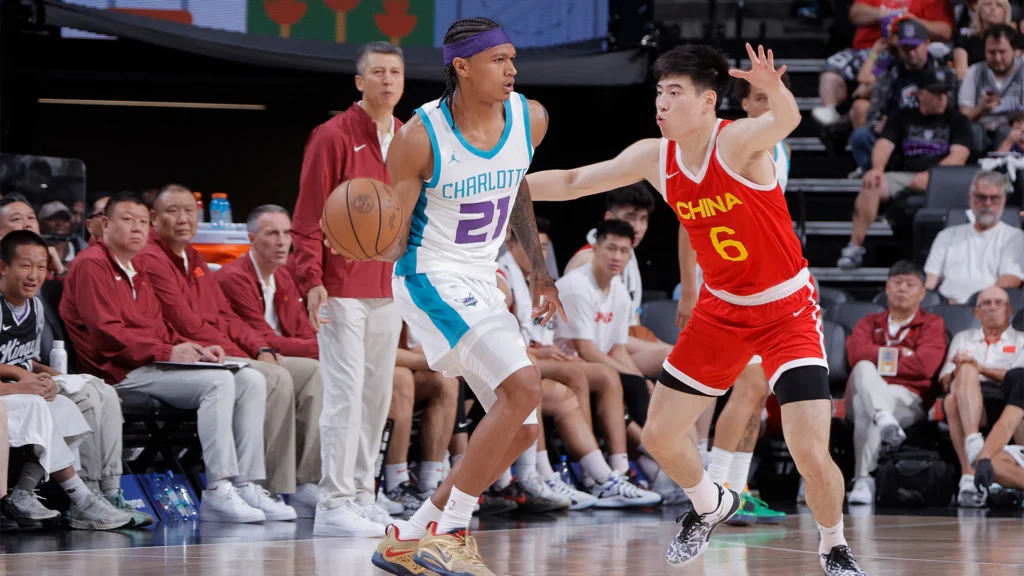
Credit: Charlotte Hornets | Rocky Widner
A kid from the rez in the UK
Then came the call from Leicester Riders Head Coach Rob Paternostro.
Battle recalls: “When Coach Rob called, he said ‘Rae, we’ve got an opportunity for you. I’ve watched your college stuff. I want you to come here and do exactly that – adapt, build on your player profile, and help us win’. He made me feel real welcome.”
Those were the words Battle needed to hear. For someone shaped by loyalty and community, a coach who had done his homework and spoke the language of championships resonated with him. Battle signed on, boarding a plane to the UK as “a little mixed kid from an Indian reservation,”. When he arrived and made the journey to Leicester, the dream of playing professional basketball in the UK, finally hit him.
“It’s unheard of,” he says, still processing the improbability. “Even now, it’s surreal. It’s been a blessing.”
At Leicester, the mission is clear: a playoff championship. Following last season’s success, the goal is to do it again. Battle is here to help make that happen. For him, winning matters, you can see that clearly in his face when he’s on court, but so does putting on a show and having fun doing it.
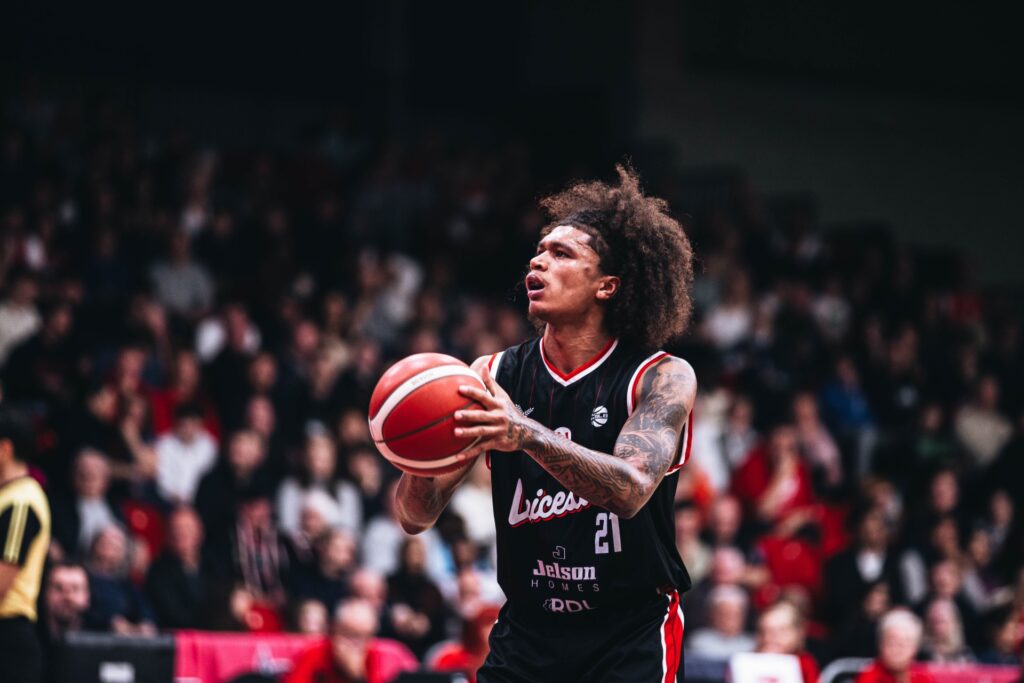
Credit: Leicester Riders | Nathan Green
Carrying the tribe forward
Even in Leicester, Battle carries home with him. His Tulalip tribal flag travels everywhere. Music – a cultural cornerstone for Native peoples and a family tradition through his father – remains central to his identity, mixed now with influences from his multicultural background and shaped into something uniquely his. Fashion, a luxury he couldn’t afford growing up, has become another form of Battle’s self-expression. A brightly coloured, vintage-looking embroidered jacket which Battle says he bought from Camden Market was admired by young fans at a recent home game.
Most importantly, Battle carries the responsibility of representation. The support he receives from Native American communities across the country, following his journey on social media, reminds him daily that he’s not just playing for himself. He’s showing other Indian kids and other minorities that where you’re from doesn’t limit where you can go.
“For me, it’s a dream come true,” says Battle.
His message to young people with big dreams is simple: “Keep going. Don’t give up. Don’t be afraid to ask for help. Don’t be afraid because you failed at something that you can’t overcome it. When you fail, you’re able to learn from that fail and turn it into a win.”
Battle’s own trajectory proves the point. He learned resilience on a reservation court, tested it through college, and is now teaching it in a professional league in the UK. Now, thousands of miles from home in Leicester, he’s living proof that where you start doesn’t determine where you finish.