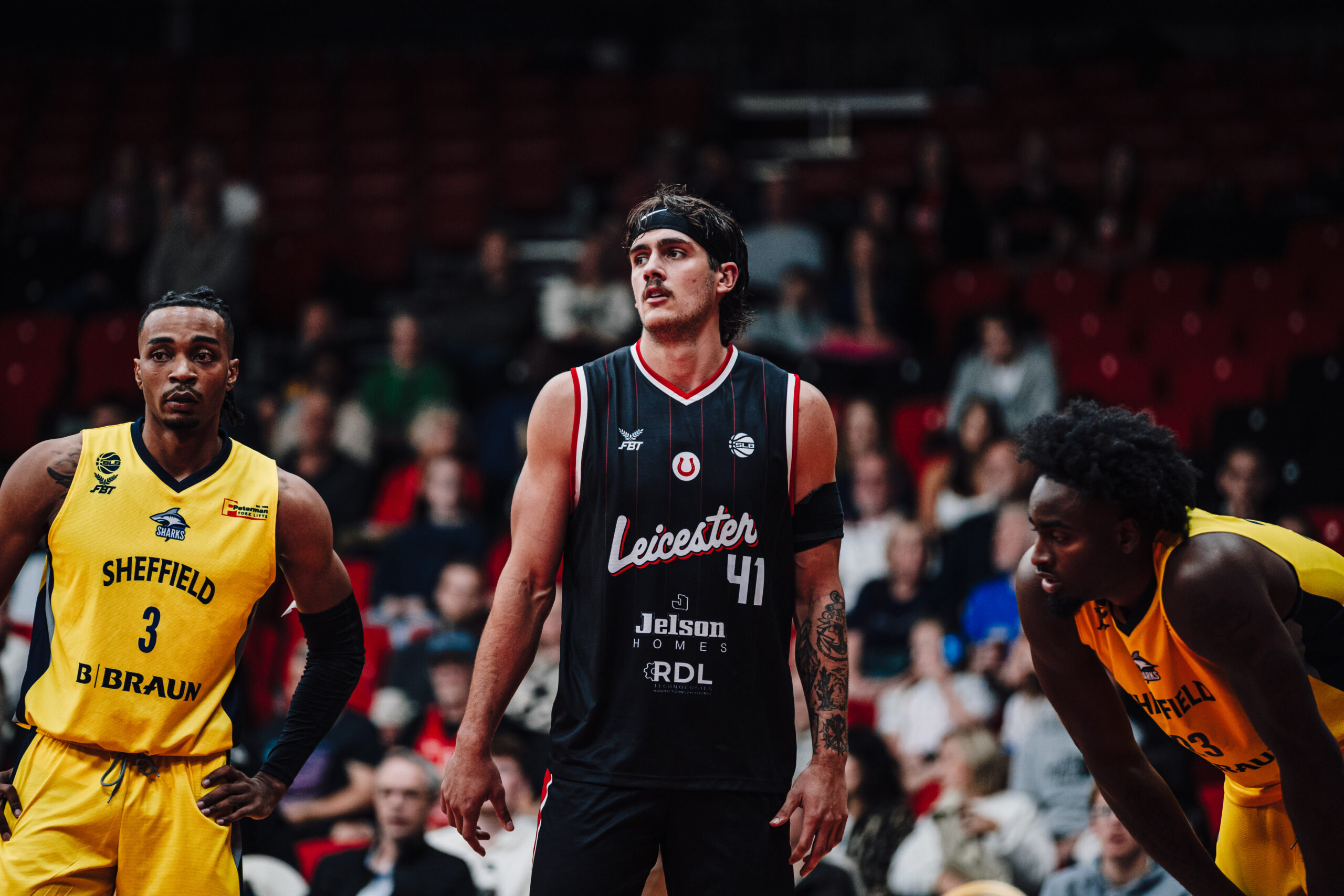
On court, Nate Martin looks like any other professional basketball player – focused, driven, intent on winning. But it’s not just his performance he has to think about during a game, it’s also how to manage having Type 1 diabetes.
Author: Emma Oliver | 1284 Communications
The diagnosis that changed everything
“You’re unique. There’s something special about you, don’t forget that however hard it gets.”
This is Martin’s message to any young person coming to terms with a Type 1 diabetes diagnosis.
He knows exactly how that moment feels. It was the summer before his freshman year of high school when he was diagnosed with the autoimmune condition, which stops the pancreas producing insulin and demands lifelong, day‑to‑day management with insulin and continuous glucose monitoring. He was just 14 when his life changed overnight.
The 6ft 9in centre from Houston, Texas, says there was no family history of Type 1 (research suggests there can be a hereditary link) – making the news more of a shock when it came following a major AAU tournament in Orlando, where he was playing for Texas Pro.
He remembers the warning signs clearly – hollowed cheeks, unquenchable thirst, and a 15‑hour drive from Houston interrupted by “30 bathroom stops because the water was just flowing” through him.
“You could see my ribs and my cheeks were all hollowed out,” he says. “I was always starving, always thirsty. I’d lost 30 or 40 pounds. I got cramps at night and I just couldn’t run up and down the court. Looking back I don’t know how I was functioning but I’d put it down to a virus or something.”
The tipping point came during a trip to Disney World, where his mum insisted on taking him to hospital. His blood sugar was “off the charts”, above 47mmol – compared with a normal range of 4 to 7mmol. He was slipping into what he calls “a little sugar coma” and spent three days in hospital with Diabetic Ketoacidosis, a life‑threatening emergency if not treated quickly.
He was discharged with armfuls of pamphlets and what he describes as a “five hour crash course” in diabetes, but the bigger shock was psychological.
“I didn’t know anything about [Type 1],” he admits. “I was worried if it would affect my life too much… if I could do sports with it and stuff. That’s initially what scared me the most.”
Basketball had been his world since he was five, and suddenly survival depended on insulin injections.
“My dad actually gave me my shots at first because I was like, I’m not giving myself the shot. I can’t do it,” he says. “My parents helped me figure out how many carbs were in everything, it was just so much new information.”
Managing diabetes in the chaos of a game
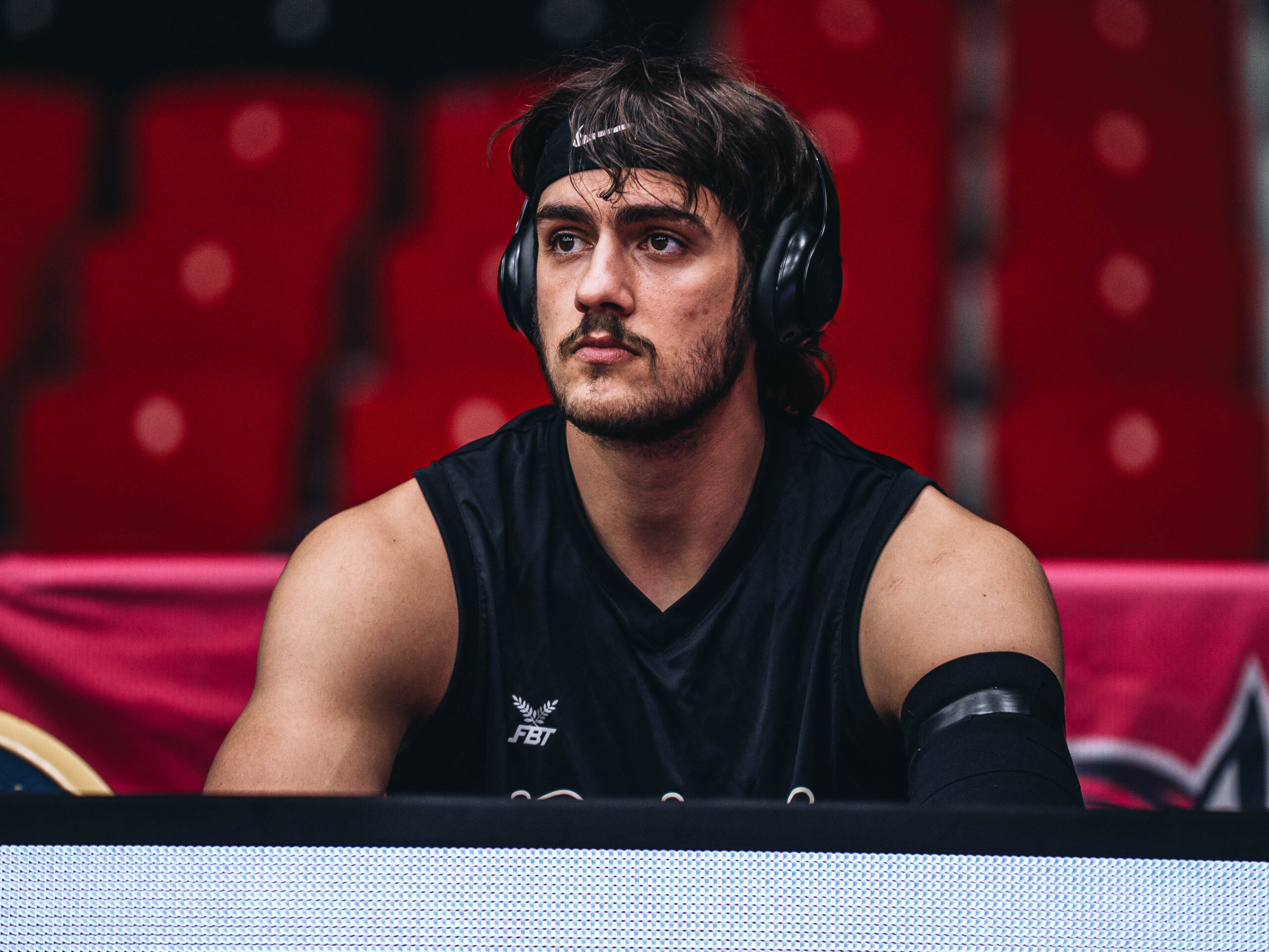
Today, Martin uses an insulin pump, attached via a small cannula, and has done for the past five or six years. The pump he uses is a T-slim and it connects to a Dexcom sensor which he wears on his arm. The sensor transmits the blood glucose levels to the pump so the pump can attempt to administer the correct amount of insulin.
Asked if it makes basketball easier, he gives a nuanced answer. “Yes and no. It’s hard because in the game you can’t really wear it. So it’s a long period of time without it on. But then if I’m going low it helps because I can suspend it. You can’t do that with a shot.”
On game nights, he will usually disconnect the pump to play, then reconnect whenever the clock allows. “I try to put it on at halftime of games, and if I get subbed out for a while because if not, I go way too high, then I feel it a little bit in the second half. Then you crash a couple hours after the game,” he adds, describing the post‑match rollercoaster.
Training brings its own complications. “If I’m dropping before practice, then I’ll eat a granola bar or something,” he explains. “But then I’ll take the pump off and I’ll look after practice and I’ve skyrocketed. And then you give a little insulin and then next thing you know, you’re crashing down after practice.
“It’s one of those things, you can never take a minute off of being diabetic. It’s always there… it’s 24/7.”
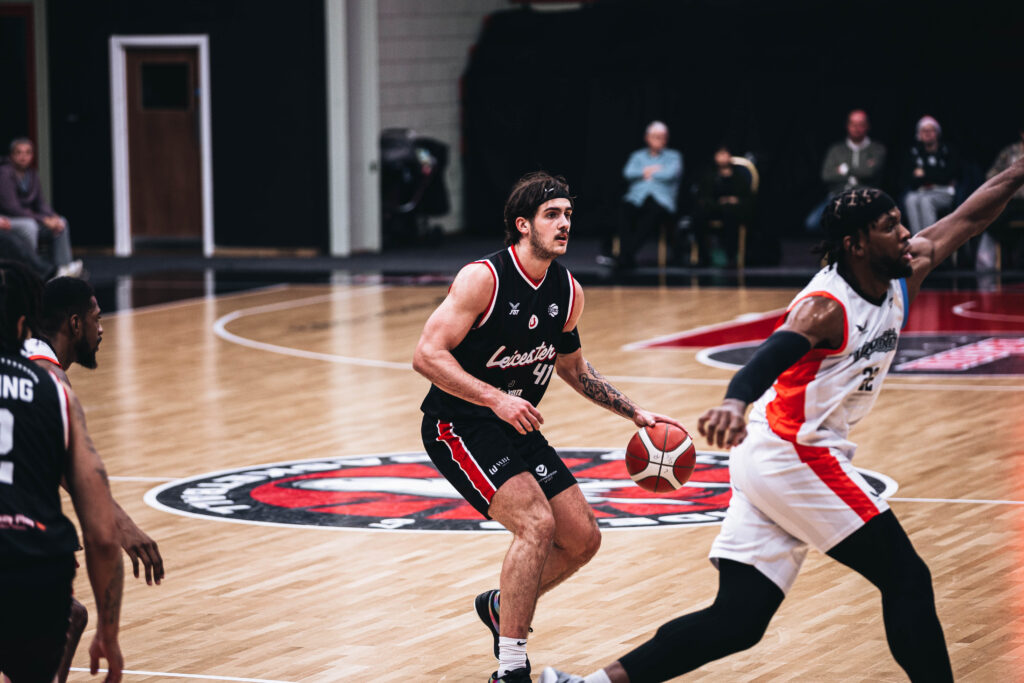
Credit: Leicester Riders Media | Nathan Green
Moving countries, juggling care
Coming to England meant not only adapting not only to a new country and a new league, but a new healthcare system.
“It was stressful,” he says. “We had to get a three month supply of stuff from my doctor at home, as a buffer, just in case.”
Once he arrived, the team physio helped him register with a GP, but the margin for error was slim. “I was running out of insulin and then I got it just in time, which was a blessing,” he recalls.
Pump supplies still make a transatlantic journey. “They only ship within the States to home, and then my dad will ship it out again to me here in the UK.”
Inside the locker room, Martin prefers a quiet approach. “I don’t really talk about it too much,” he says. “My coaches know I’m diabetic and if I say that I’m going low, then they’ll be like, ‘Yeah, go get a snack’. So, they’re supportive but I kind of keep it to myself.”
Away from the court, he leans on his family and his fiancée, whom he’s set to marry in Austin, Texas, once the season ends. He says the hardest spell in terms of living with the condition came in his first year of college – his first time managing diabetes without his parents around.
“I was used to my family helping and then I was on my own. I went through a phase of ‘Screw this. I don’t want to be diabetic. This sucks’. Now, I’m like, it is what it is. I can’t change it at this point.”
Credit: Leicester Riders Media | Nathan Green
What he’d tell young athletes with Type 1
For young people with Type 1 who want to play sport, Martin stresses: “You’re unique. There’s something special about you.”
He talks about resilience, embracing “good days and bad days” and not letting the numbers define you.
“You have to accept you’ll have ups and downs and days where your blood sugar is high and days where it’s low. It’s hard but you just have to get on with it,” he says.
“I always think it’s cool to see other diabetic athletes and what they’re going through as it helps you to see how strong a person you have to be to do it.”
Alongside mindset, he emphasises the importance of the basics – knowing what you eat, putting in extra work outside practice, and enjoying the game.
“Staying positive and enjoying the moment is important. I’ve struggled a bit with that because it’s hard being Type 1 but you have to try to enjoy playing and having fun because if you’re not having fun it defeats the purpose.”
Credit: Leicester Riders Media | Nathan Green
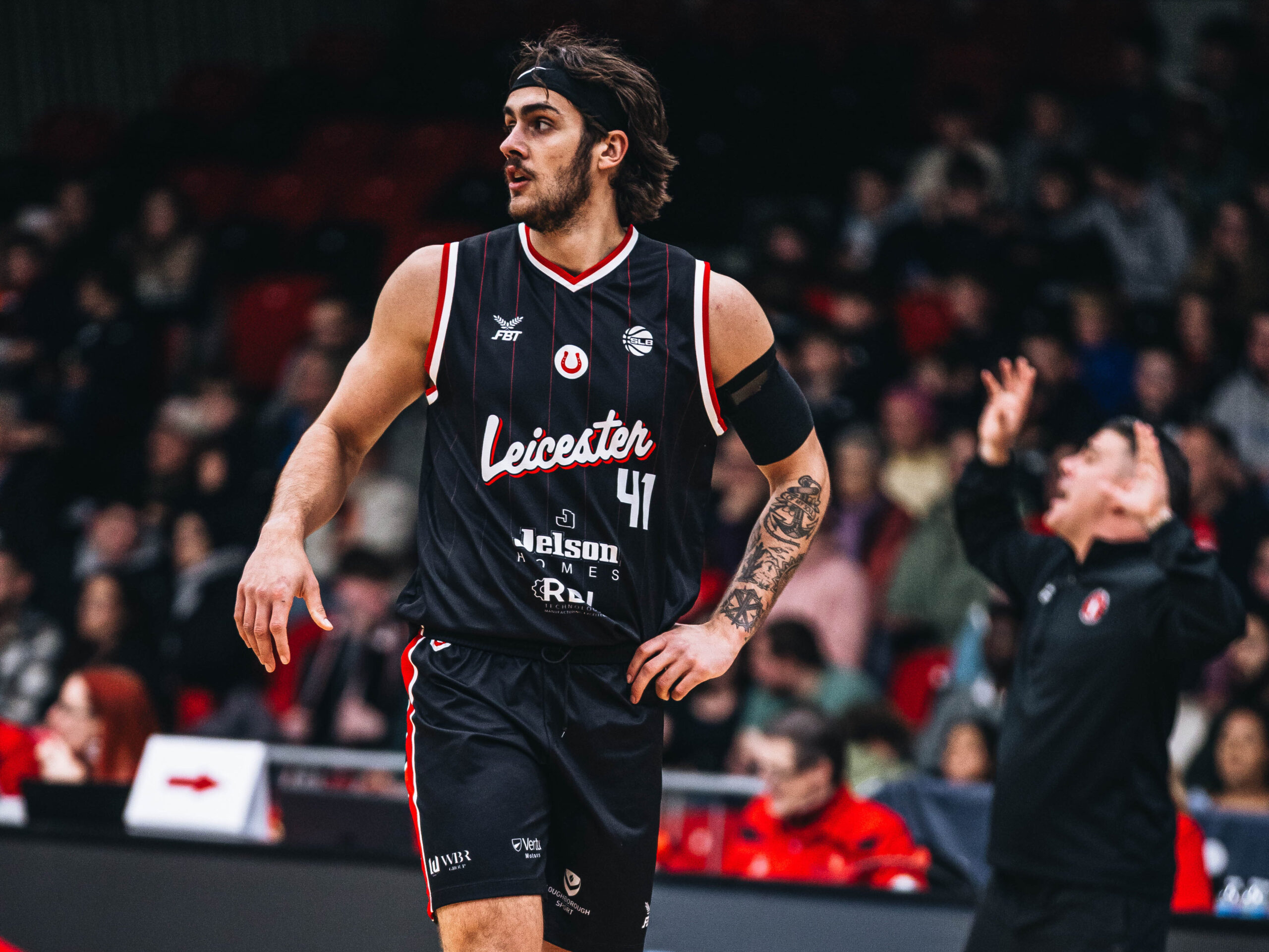
Role models matter as well. Martin grew up a “die hard Mavericks fan” and idolised Dirk Nowitzki so much that he now wears number 41 in his honour. “He’s my favourite player of all time, he inspired me a lot,” he says.
Today, Martin says his ambition is to keep advancing in his basketball career while bringing praise to God.
For young athletes watching from the stands, his story sends a clear message. Type 1 diabetes doesn’t have to change your life completely or define who you are. You can still be whoever you want to be – it just takes a little more planning and a lot of resilience but you’re a stronger person for it.